
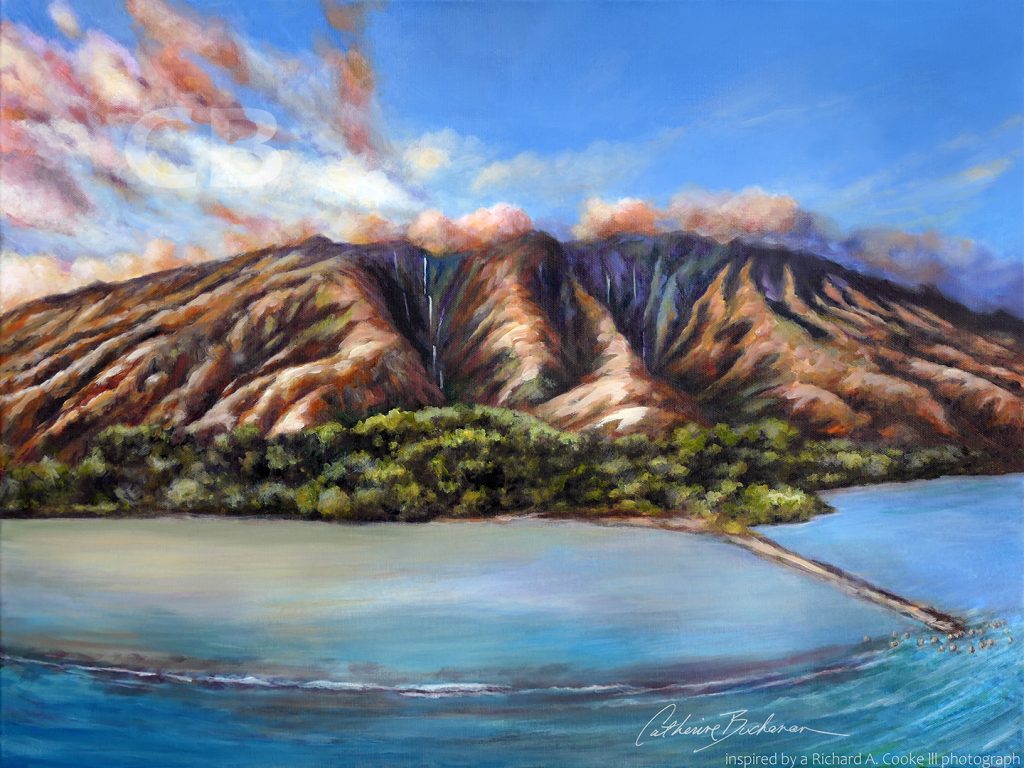
East end Molokai from the vantage point of a sea going tropical bird. The composition is defined by strong horizontal layers, transitioning from the deep cerulean open ocean to the turquoise sanctuary of the lagoon behind the barrier reef. The skeletal remains of the historic Kamalo Wharf anchor the viewer’s eye, a reminder of the island’s agricultural past.
Beyond the dense ribbon of coastal vegetation, the volcanic iron oxide and ochre slopes of the mountain rise sharply to the peaks of Kamakou Preserve high on the ridge. Tucked into the shadowed creases of the deepest valley, the elusive Seven Sisters waterfalls appear as silver threads. The illusive nature of the falls is due to the amount of rainfall and the difficulty of finding a vantage point to view them.
The high-key palette conveys intense tropical light where the sky mimics sun-scorched ridges. Textured layers emphasize the erosive power of time and water on iron rich basaltic rock, while the water is treated softly to suggest the calm, protective nature of the natural coral reef in a contemporary, realistic style.
The original photograph that inspired this painting was taken by Richard A. Cooke III, a well-known local environmentalist and photographer who traveled the world for National Geographic magazine. His drone flying skills mimic those tropical birds. Six of the eighteen paintings in the Molokai Landscape Series were painted with permission from Richard Cooke’s photographs in collaboration, to celebrate the best of Molokai. The series was reproduced on canvas and is currently on exhibit at the Molokai Airport in Ho’olehua.
Please inquire about which original paintings are still available.