Oh if houses could talk. The stories I’ve heard about parties at Auntie Gertie’s. She was a character full of love and a penchant for gatherings with music and laughter that went late into the night. Living with the ravages of Hansen’s disease (formerly leprosy) the residents of Kalaupapa had finally earned their rights to privacy from the prying eyes of the outside world in the settlement of Kalaupapa. While the disease had been arrested, the symptoms that devastated a person’s face and limbs were not curable.
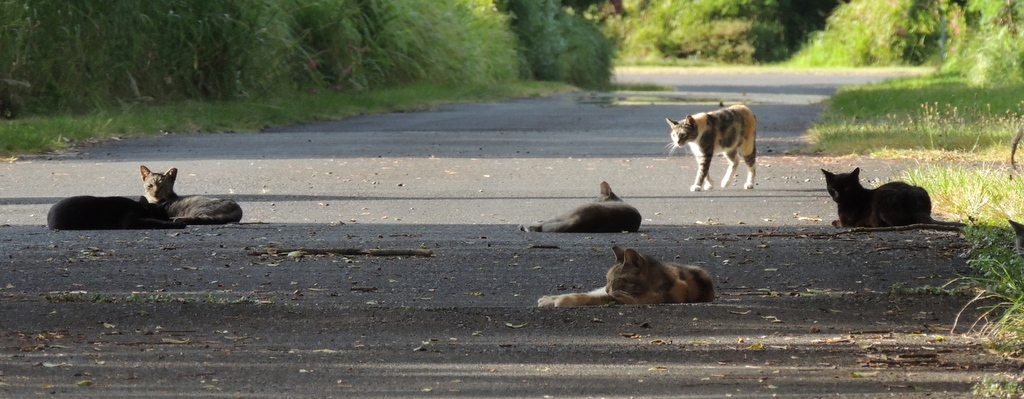
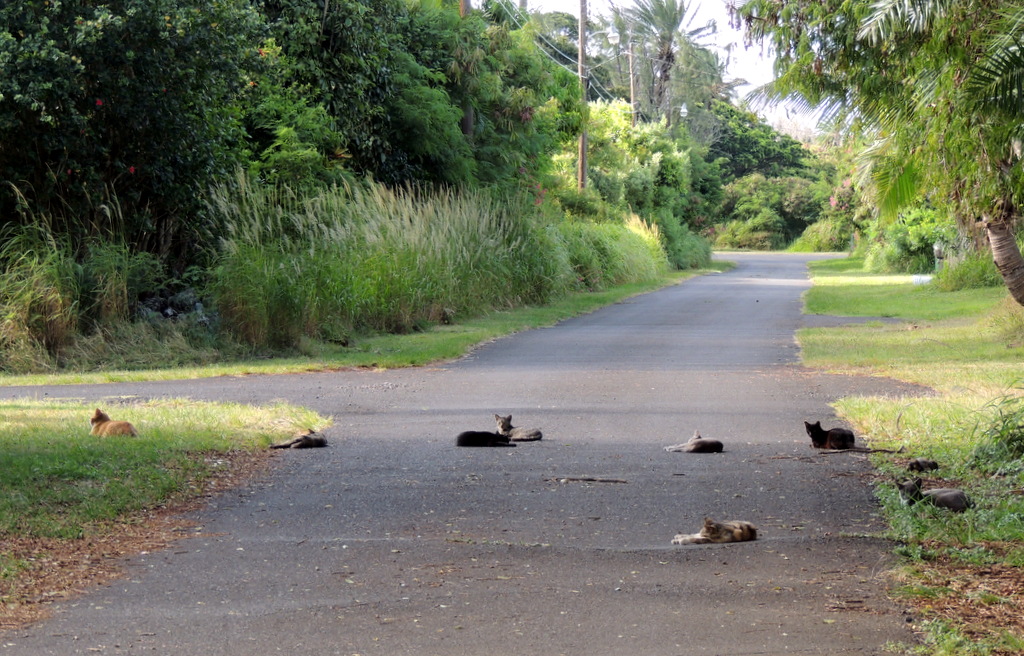
It is possible to visit Kalaupapa on Molokai during specific visiting hours. The rest of the time, it belongs to the residents, until the last one leaves at which point the peninsula fully becomes a National Park. When the tours left with the tourists in the early afternoon, Auntie Gertie got in her rusty old pick-up and drove to a number of street corners to leave food for the large numbers of stray cats.
Everyone stayed off the road during Auntie’s forays. She used the grassy edges of the road to determine when she left the pavement, because even though she was fully blind, the cats mattered and nobody thought to stop her. The rules have been different from the beginning, where lawlessness and cruelty reigned until Catholic priests and nuns built hospitals, schools and churches. Other denominations followed and there is a surprising number of historic churches in the settlement. Humanity redefined the settlement, but it still lives by it’s own set of rules, including allowing a blind woman to drive for her love of cats.
To this day cats still lounge around on the intersections where Auntie Gertie fed her beloved cats at the same time every afternoon, and someone still shows up to feed them.